
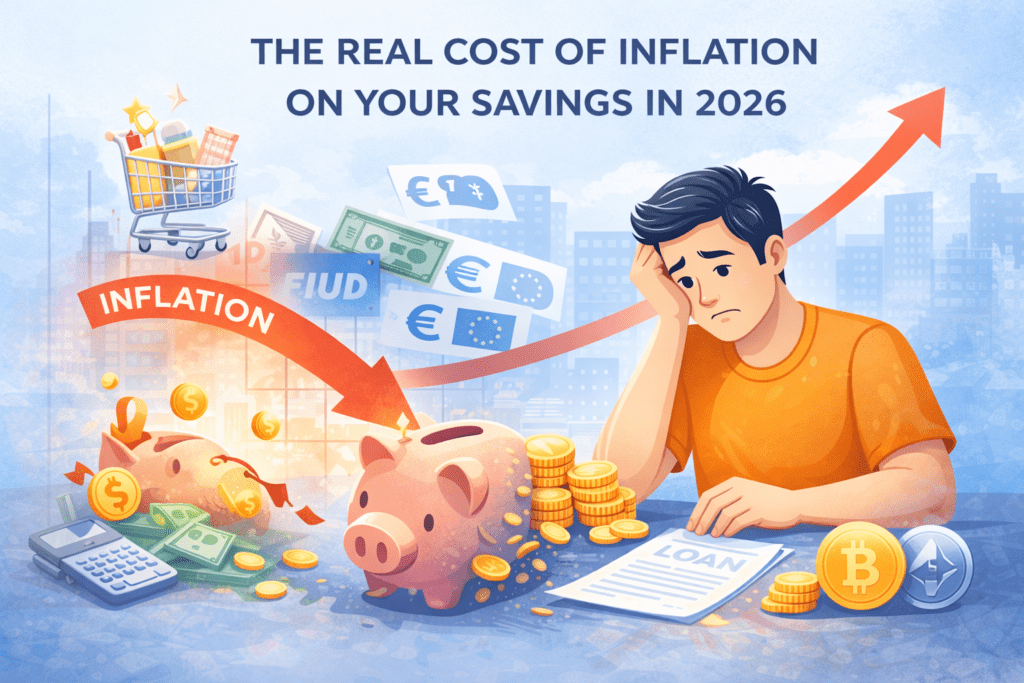
Inflation isn’t just a number reported on the news — it silently reduces your purchasing power every day.
In 2026, global inflation trends are affecting multiple asset classes:
- USD & EUR: higher interest rates vs rising consumer prices
- Gold & Silver (XAU/XAG): safe haven but volatile
- Crypto (BTC, ETH, BNB): speculative hedge, high risk
Even if your account balance grows nominally, real value might drop if returns don’t outpace inflation.
How Inflation Really Affects Your Money
- Cash Savings
- 3% inflation reduces $10,000 to effective $9,700 in one year.
- Compounded over 5 years → loss of ~$1,500 in purchasing power.
- Stocks & ETFs
- Equities may outperform inflation but sector-dependent.
- Consumer staples, energy, and tech ETFs show resilience.
- Traditionally hedge against inflation.
- XAU/USD and XAG/USD trends 2020–2026 show average annual returns ~5–6%, often below inflation spikes in volatile years.
- Crypto Assets
- BTC/ETH/BNB can outpace inflation in bull runs.
- But volatility risk is extremely high → not suitable for risk-averse investors.
Actionable Strategies to Protect Wealth
- Diversification: Spread across cash, stocks, gold, crypto.
- Inflation-linked bonds: Government bonds tied to CPI.
- Regular portfolio review: Adjust allocation every 6–12 months.
- Emergency fund: Keep 6 months of expenses in high-yield savings.
Why Understanding Inflation Matters
Ignoring inflation leads to:
- Reduced retirement savings
- False sense of wealth
- Poor investment decisions
Understanding the real cost of inflation empowers smarter financial decisions.