
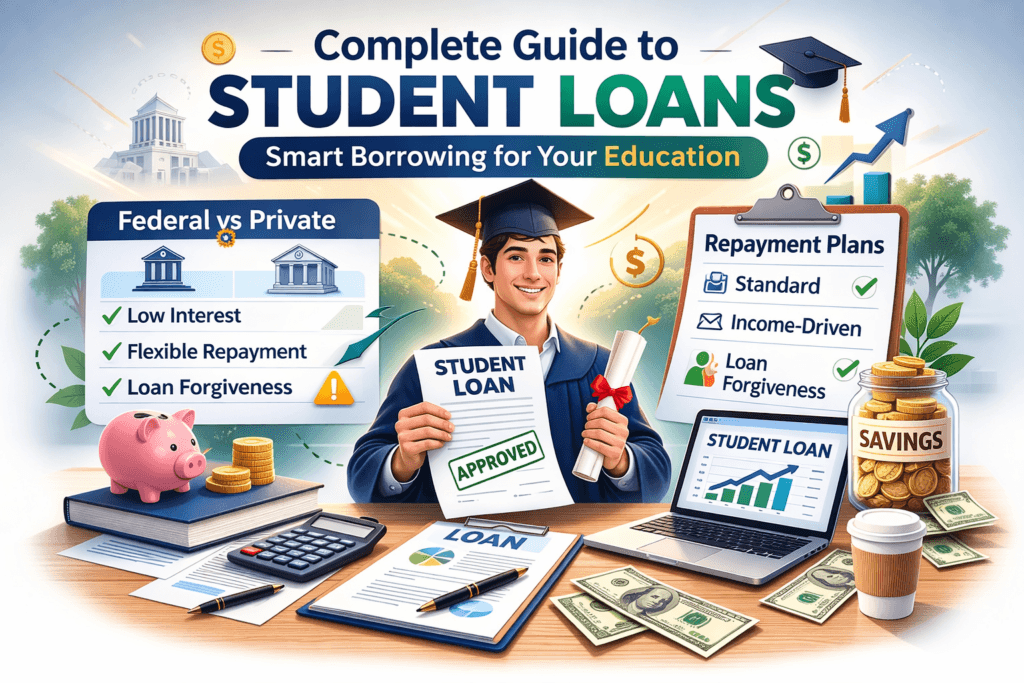
Student loans have become one of the most common financial tools used to access higher education. In many countries—especially in the United States—the cost of tuition, housing, books, and other academic expenses can easily reach tens of thousands of dollars per year. For many families, paying that amount upfront simply isn’t realistic. This is where student loans step in.
At its core, a student loan is borrowed money that helps you pay for college today, with the promise that you will repay it in the future—usually with interest.
But here’s the part many students overlook: student loans are not just “school money.” They are long-term financial commitments that can follow you for 10, 20, or even 30 years after graduation. Understanding how they work before signing anything can make a massive difference in your financial future.
What Exactly Are Student Loans?
Student loans are specialized loans designed specifically to fund higher education expenses. These expenses may include:
- Tuition and academic fees
- Textbooks and study materials
- Housing and meal plans
- Transportation
- Technology and equipment
Unlike personal loans, student loans often come with borrower protections and structured repayment options. However, they also accumulate interest over time, which increases the total amount you will eventually repay.
How Student Loans Work
The process typically follows these steps:
- You apply for financial aid.
- A lender (government or private institution) approves your loan.
- Funds are sent directly to your school.
- After graduation—or if you leave school—you enter a grace period.
- Repayment begins in monthly installments.
Most federal student loans offer a grace period of about six months after graduation. This gives borrowers time to find employment before payments start.
Interest may begin accruing immediately, depending on the loan type. If unpaid interest accumulates, it can be added to your principal balance—a process called capitalization—making the loan more expensive over time.
Types of Student Loans
Understanding the difference between loan types is crucial.
Federal Student Loans
These are funded by the government and generally offer:
- Fixed interest rates
- Income-driven repayment plans
- Loan forgiveness programs
- Deferment and forbearance options
There are two primary types:
- Subsidized loans (government pays interest while you are in school)
- Unsubsidized loans (interest accrues immediately)
Federal loans are usually the safest first option due to their borrower protections.
Private Student Loans
Private lenders such as banks and financial institutions offer these loans.
Key characteristics include:
- Fixed or variable interest rates
- Credit-based approval
- Often require a co-signer
- Fewer repayment protections
Private student loans may be helpful if federal aid is insufficient, but they often carry more financial risk.
Interest Rates and Repayment Plans
Interest rates significantly impact the total repayment amount. Even a 1–2% difference can mean thousands of dollars over the life of the loan.
Common repayment plans include:
- Standard Repayment (fixed payments over 10 years)
- Graduated Repayment (payments increase over time)
- Income-Driven Repayment (IDR) (based on income level)
Choosing the right repayment plan can reduce financial stress and prevent default.
The Real Cost of Student Loans
One of the biggest misconceptions about student loans is focusing only on the monthly payment. What truly matters is:
- Total repayment amount
- Interest accumulated over time
- Loan term length
For example, borrowing $30,000 at 5% interest over 10 years may result in paying over $38,000 total. Extending the term lowers monthly payments—but increases total interest paid.
Pros and Cons of Student Loans
Advantages
- Access to higher education
- Potential for higher lifetime earnings
- Flexible repayment options (federal loans)
- Builds credit history
Disadvantages
- Long-term debt burden
- Interest accumulation
- Financial pressure after graduation
- Limited flexibility with private loans
Smart Borrowing Strategies
Before taking on student loans, consider these strategies:
- Exhaust scholarships and grants first
- Borrow only what you truly need
- Understand interest rates clearly
- Compare federal and private options
- Calculate total repayment cost
Education can be one of the most valuable investments you ever make—but only if the debt remains manageable.
Final Thoughts on Student Loans
Student loans can open doors to opportunity, higher income, and career growth. However, they require thoughtful planning and financial awareness. Borrowing responsibly, understanding repayment terms, and preparing for long-term obligations are essential steps in building a strong financial future.
When used wisely, student loans are not just debt—they are structured financial tools that can support upward mobility. But when misunderstood, they can become overwhelming burdens.
The key is knowledge before commitment.